
Overview – Loftus and Palmer (1974)
Loftus and Palmer (1974) is a key study in the cognitive area of psychology that investigated how information presented after an event can influence people’s memory of what happened. By demonstrating that the wording of questions could affect participants’ recollections of a car crash video they had watched previously, the researchers demonstrated that memory can be influenced by external information. The study contributed to our understanding of the reconstructive nature of memory and the influence of post-event information on eyewitness testimony.
You can jump to different sections of this article via the links below:
- Aim
- Method
- Results
- Conclusions
- Evaluation and methodological issues
- Relation to other core cognitive psychology studies
Loftus and Palmer (1974)
Aim
The aim of the study was to find out whether the wording of questions asked after an event could influence people’s memory of what had happened.
Loftus and Palmer were particularly interested in the effects of leading questions – questions that are phrased in a way that suggests a particular answer. Leading questions were already recognised as a potential problem in legal settings. For example, a lawyer in a murder trial might ask a witness “how violently did you see the defendant attack the victim?” rather than “what did you see the defendant do?” This wording may influence the witness’ memory of the event.
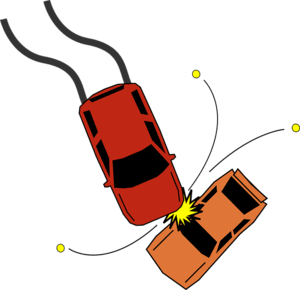 The researchers proposed that information presented after an event could become incorporated into a person’s memory of the original event. As such, they predicted that changing the wording of a question about a filmed car accident would influence participants’ estimates of what they had witnessed and potentially alter their later memory of the event.
Method
Two independent measures laboratory experiments examining whether different forms of questioning could influence eyewitness memory.
- Experiment 1 looked at whether the wording of a question affected participants’ estimates of the speed of vehicles involved in a filmed car accident.
- Experiment 2 looked at whether the wording of a question could alter participants’ subsequent memory of the accident (specifically whether they remembered seeing broken glass that wasn’t actually there).
Experiment 1
Participants and sampling
- 45 university students from the University of Washington
- Divided into 5 groups of 9
- Note: The original paper doesn’t mention how these 45 students were recruited (e.g. volunteer or opportunity sampling)
Procedure
Loftus and Palmer used a laboratory experiment to investigate whether the wording of a question could influence participants’ estimates of the speed of vehicles involved in a car accident. The study took place in a controlled setting at the University of Washington.
All 45 participants watched 7 short film clips of traffic accidents. 4 of the 7 clips contained staged car accidents (the other clips showed other traffic situations). After watching each clip, participants completed a questionnaire about what they had seen. There were two parts to each questionnaire:
- Participants were first asked to give a written account of the accident they had just watched.
- They then answered a series of questions about the accident, including a critical question about the speed of the vehicles.
The researchers manipulated the independent variable (IV) by changing the wording of the critical question. Participants were asked:
“About how fast were the cars going when they _____ each other?”
The 5 groups were asked the question with different verbs in place of _____ :
- ‘Contacted’
- ‘Hit
- ‘Bumped’
- ‘Collided’
- ‘Smashed’
The dependent variable (DV) was the participants’ estimated speed of the vehicles (measured in miles per hour). This provided a quantitative measure that could be compared between the 5 verb conditions.
The study used an independent measures design. Each participant took part in only one of the 5 verb conditions, meaning they were exposed to only one version of the critical question. This prevented participants from seeing different versions of the question and potentially guessing the purpose of the study or changing their responses based on previous questions.
The researchers also included distractor questions alongside the critical question. This helped prevent participants from guessing the actual purpose of the experiment and changing their responses.
To reduce order effects, the groups were shown the films in different orders. This meant that the position of a particular film in the sequence was less likely to influence participants’ responses.
Results
The results showed that the wording of the question affected participants’ estimates of the speed of the cars.
Participants who were asked how fast the cars had ‘smashed’ into each other gave the highest speed estimate (40.8 mph on average). Whereas those who were asked how fast the cars had ‘contacted’ each other gave the lowest estimate (31.8 mph):
| Verb used | Mean speed estimate |
|---|---|
| ‘Smashed’ | 40.8 mph |
| ‘Collided’ | 39.3 mph |
| ‘Bumped’ | 38.1 mph |
| ‘Hit’ | 34.0 mph |
| ‘Contacted’ | 31.8 mph |
Overall, the results showed a 12.2 mph difference between the ‘smashed’ and ‘contacted’ conditions.
The researchers used an analysis of variance (ANOVA) test to measure whether the differences in participants’ speed estimates between the 5 verb conditions were statistically significant. The test showed that the effect of the verb used was statistically significant (p <0.005) and so the differences in speed estimates were unlikely to have occurred by chance.
As such, the results supported the prediction that stronger verbs would lead to higher estimates of vehicle speed. This suggests that the wording of a question can influence memory for an event.
Experiment 2
Participants and sampling
- 150 university students from the University of Washington
- Divided into 3 groups of 50
- Note: The original paper doesn’t mention how these 45 students were recruited (e.g. volunteer or opportunity sampling)
Procedure
Experiment 2 also used a laboratory experiment with an independent measures design.
Participants were shown a film of a car accident and then completed a questionnaire about what they had seen.
The participants were divided into 3 groups, and each group was asked a different critical question about the speed of the vehicles:
- ‘Smashed’: “How fast were the cars going when they smashed into each other?”
- ‘Hit’: “How fast were the cars going when they hit each other?”
- Control condition: Participants were not asked a question about speed immediately after watching the film.
The key difference from experiment 1 was that the researchers were now interested in whether the wording of the question would affect participants’ later memory of the accident, rather than just their initial estimate of speed.
After answering the initial questionnaire, participants were not told that they would be tested again. They were contacted one week later and asked to return to the laboratory. They were then given a questionnaire containing 10 questions about the accident, including the critical question: “Did you see any broken glass?” – the film did not actually contain any broken glass.
The independent variable (IV) was the wording of the initial critical question (smashed, hit or no speed question).
The dependent variable (DV) was whether participants later reported seeing broken glass.
Results
The results showed that participants who were asked the ‘smashed’ question were more likely to report seeing broken glass, even though no broken glass was actually present in the film.
The table below shows the number of participants in each condition who reported seeing broken glass:
| Response | ‘Smashed’ | ‘Hit’ | Control |
|---|---|---|---|
| Yes | 16 | 7 | 6 |
| No | 34 | 43 | 44 |
- In the ‘smashed’ condition, 16 participants (32%) said they had seen broken glass.
- In the ‘hit’ condition, 7 participants (14%) said they had seen broken glass.
- In the control condition, only 6 participants (12%) said they had seen broken glass.
In other words, participants who were asked the more strongly worded ‘smashed’ question were more than twice as likely to report seeing non-existent broken glass compared with the control group.
The researchers used a chi-squared test to analyse the results. The difference between the groups was statistically significant (p <0.05), which makes it unlikely that the effect was simply due to chance.
These results support the idea that leading questions can distort memory. The stronger wording of the question may have introduced post-event information that became incorporated into participants’ memories of what they had seen.
Conclusions
Taken together, the two experiments show that memory is not always an accurate record of past events and can be influenced by information received after an event has occurred. In particular, the wording of a question can affect how people remember an event.
In experiment 1, participants who were asked about a car accident using stronger verbs such as ‘smashed’ gave higher estimates of the speed of the vehicles than participants who were asked using weaker verbs such as ‘contacted’. This demonstrated that leading questions can influence people’s responses about an event they have witnessed.
Loftus and Palmer suggested two possible explanations for this effect:
- Response bias: The wording of the question may influence the answer participants give without actually changing their memory. For example, the word ‘smashed’ suggests a more severe accident and may therefore lead someone who is uncertain about the speed to choose a higher estimate.
- Memory reconstruction: The wording may actually change the participant’s memory of the event. The word ‘smashed’ may cause the accident to be remembered as more severe than it really was.
Reconstructive memory
Experiment 2 provided evidence for the memory reconstruction explanation. Participants who had been asked the ‘smashed’ question were more likely to report seeing broken glass even though there was no broken glass in the film. This suggests that the effect was not simply a change in the answer participants gave to the speed question. Instead, information provided after the event may have become incorporated into their memory of the original event.
“When these two pieces of information are integrated, the subject has a memory of an accident that was more severe than in fact it was. Since broken glass is commensurate with a severe accident, the subject is more likely to think that broken glass was present.”
Overall, Loftus and Palmer concluded that memory is reconstructive rather than a perfect record of what happened. When we recall an event, information from the original event can become combined with information received afterwards, such as the wording of a question. This can lead people to remember details that never actually occurred.
Evaluation
Research methods and techniques
Two laboratory experiments using an independent measures design. Participants watched films of car accidents and answered questions about what they had seen. The researchers manipulated the wording of the critical question and measured its effect on participants’ speed estimates and later memory.
- High control and standardisation: The same films, questions and procedures were used for participants, making it more likely that differences in responses were caused by the wording of the questions.
- Artificial setting: Watching filmed car accidents in a laboratory is less realistic than witnessing a genuine accident, which may reduce ecological validity.
Population and sampling
Participants were university students from the University of Washington. Experiment 1 used 45 students. Experiment 2 used 150 participants.
- Large sample size: Experiment 2 had a relatively large sample of 150 participants. This provided a large amount of data, which makes it more likely that the findings are valid.
- Not such a large sample size: However, experiment 1 only used 45 participants.
- Student sample: Participants were drawn from a specific and narrow population (students) and so will differ from the general population in terms of age and education.
Types of data
Mainly quantitative data. This enabled the researchers to measure and analyse participants’ responses numerically.
- Quantitative Data: Speed estimates in experiment 1 and whether participants reported seeing broken glass in experiment 2.
- Objective and easy to compare: Numerical data allowed the researchers to calculate mean speed estimates and use statistical tests to determine whether differences between conditions were significant.
- Qualitative Data: Participants were also asked to give a written account of the accident they had seen.
- Provides additional information: Participants’ descriptions provided more detailed information about how they remembered the accident, although the main findings were based on quantitative measures.
Representativeness and generalisability
The study used university students from the University of Washington, with 45 participants in experiment 1 and 150 students in experiment 2.
- Limited sample: The participants were all university students from one American university, meaning the findings may not generalise to people of different ages, educational backgrounds, and cultures. For example, older adults may have different experiences of driving and road accidents, which could affect how they remember and interpret an accident.
Ethical issues
- Deception: Participants were not told the true purpose of the critical questions. However, this was necessary to prevent demand characteristics from skewing the results.
- Informed consent: Participants knew they were taking part in an experiment and agreed to participate. However, they were not told the precise aim of the study or that the wording of the questions was being manipulated, as this could have affected their responses.
- Protection from psychological harm: The films showed traffic accidents, which could potentially cause some participants distress. However, the films were staged car accidents and did not involve human passengers or show any graphic injuries.
- Debriefing: Participants could have been informed about the true purpose of the study afterwards so that they understood why misleading questions had been used.
Overall, these ethical issues are relatively minor in the scheme of things. Participants knew they were taking part in an experiment, the films did not show graphic injuries, and the deception was necessary to prevent participants from changing their answers (demand characteristics). As such, the ethical compromises in this study were necessary to produce valid results.
Validity
- Internal Validity: Are the findings caused by the wording of the question rather than another variable?
- Standardisation: The same films and procedures were used across all the conditions, and so the only real difference was the wording of the critical question. As such, this makes it more likely that the wording is what caused differences in participants’ responses.
- Possible demand characteristics: The participants were told they were taking part in a study of memory, so they may have guessed that the wording of the questions was important (especially as psychology students who know how studies work). As such, this may have influenced their responses. However, the inclusion of several distractor questions will have reduced the risk of participants guessing the goal of the study.
- Ecological Validity: Do findings translate to the real world?
- Laboratory experiment: Watching a filmed accident of a staged car crash is less realistic than witnessing a genuine car crash. Participants also knew they were taking part in a study, so their responses may not perfectly reflect how eyewitnesses would behave in real situations (e.g. in a courtroom providing evidence).
Reliability
- Internal Reliability: Is the procedure consistent across all participants in this particular study?
- Highly standardised procedure: Participants watched the same films and received standardised questions, making the procedure consistent across participants.
- External Reliability: Can the study be replicated at a different time and across different groups to produce consistent results?
- Easy to replicate: The controlled laboratory procedure, standardised films, and clearly defined questions make the study simple for other researchers to repeat.
Ethnocentrism
The study was conducted in the United States using American university students.
- Weaknesses:
- Limited cultural representation: The study only investigated participants from one American university, so it cannot establish whether the effects of leading questions on memory are identical across different cultures.
- Language differences: The study relied on the meanings and emotional associations of particular English words such as ‘smashed’ and ‘contacted’. These associations may differ across languages and cultures and as such may limit the generalisability of the findings.
However, cognitive processes such as memory are based on the functioning of the human brain, which is broadly similar across cultures. As such, the basic processes involved in memory and post-event information may be universal human behaviours and so the findings are likely to apply across cultures.
Evaluation summary table
| Loftus and Palmer (1974) | |
|---|---|
| Research methods and techniques | Strengths: Laboratory experiments had high control and standardisation, making it more likely that differences in responses were caused by the wording of the questions. Weaknesses: The artificial laboratory setting may reduce ecological validity. |
| Data types | Mainly quantitative data, allowing responses to be measured numerically, compared between conditions and analysed using statistical tests. |
| Representativeness and generalisability | Limited sample: Participants were university students from one American university, so the findings may not generalise to people of different ages, backgrounds or cultures. Experiment 2 had a relatively large sample of 150 participants, providing a large amount of data. |
| Ethical issues | Participants were not told the true purpose of the questions, but this deception was relatively minor and necessary to prevent demand characteristics. The films were also non-graphic and did not involve real injuries. |
| Validity | High internal validity: The standardised procedure meant the wording of the question was the main difference between conditions. However, the study may lack ecological validity as the artificial setting may not reflect how people respond to real-life accidents. |
| Reliability | The highly standardised procedure, films, and questions make the study easy for other researchers to replicate. |
| Ethnocentrism | The study used American university students and relied on the meanings of English words such as ‘smashed’ and ‘contacted’, which may have different associations in other cultures and languages. |
Relation to cognitive psychology more broadly
Loftus and Palmer (1974) contributes to the cognitive area of psychology by demonstrating how memory can be influenced by information received after an event. The study suggests that memory is not always an accurate record of what happened but can be reconstructed and affected by factors such as the wording of questions.
The table below summarises how this study compares with other core studies in this area and evaluates its contribution and current relevance:
| Loftus and Palmer (1974) | |
|---|---|
| How the study relates to the cognitive area of psychology | Loftus and Palmer contributes to the cognitive area by demonstrating how memory can be reconstructed and influenced by information received after an event. The study shows that memory is not always an accurate record of what happened. |
| Comparison with Grant et al (1998) |
Similarities:
Both studies investigate memory and show that memory can be affected by factors outside the original experience of an event. Differences:
Loftus and Palmer investigated how leading questions can affect eyewitness memory, whereas Grant et al investigated how environmental context and noise can affect memory for learned information. |
| Comparison with Simons and Chabris (1999) |
Similarities:
Both studies investigate the reliability of memory and demonstrate that what people remember may not accurately reflect what they originally experienced. Differences:
Loftus and Palmer focused on post-event information affecting memory, whereas Simons and Chabris focused on attention and how paying attention to one specific thing can affect later recall of an unrelated and unexpected other thing. |
| Contribution to understanding diversity |
Individual differences:
The study suggests that memory can be affected by the information people receive after an event. However, it does not look at why some individuals may be less influenced by misleading information than others. Social and group differences:
The study did not investigate differences between social groups so provides limited evidence about whether different groups of people are affected differently by leading questions. Cross-cultural differences:
The study used American university students, so it provides limited evidence about whether the effects of leading questions are the same across different cultures and languages. |
| Usefulness | Loftus and Palmer’s research has been useful for understanding the problems associated with eyewitness testimony and the reconstructive nature of memory. Applications include:
|
| Current relevance | Loftus and Palmer remains relevant because eyewitnesses are still used in criminal investigations and court cases. However, modern technology such as CCTV, body cameras, and smartphones provides additional evidence that may reduce reliance on eyewitness memory. |