
Overview – Freud (1909)
Freud (1909) is a classic study in the psychology of individual differences that investigated how unconscious processes may influence an individual’s development and behaviour – particularly the development of phobias. Freud conducted an in-depth case study of a young child – Little Hans – examining his behaviour, fears, and dreams in relation to his theory of psychosexual development. Freud argued that Hans’ phobia of horses was linked to unconscious conflicts – particularly the Oedipus complex and castration anxiety during the phallic stage of development – and that resolving these conflicts through psychoanalysis contributed to the disappearance of his symptoms. The study provided support for Freud’s psychodynamic explanations of individual behaviour but has been criticised for its reliance on subjective interpretations and a lack of objective evidence.
You can jump to different sections of this article via the links below:
- Aim
- Method (sampling and procedure)
- Conclusions
- Evaluation and methodological issues
- Relation to other psychological studies of individual differences
Freud (1909)
Aim
The aim of Freud’s study was to investigate his theory of psychosexual development – particularly the phallic stage and the Oedipus complex.
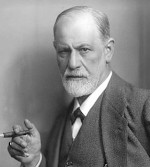 Freud’s theory of psychosexual development says that childhood maturation involves passing through a sequence of 5 distinct stages with different parts of the body becoming particularly important at different stages. He argued that this process is influenced by both nature and nurture, as a child’s experience and how they are treated can influence how they progress through these stages:
| Stage | Age | Pleasure focus |
Description |
| Oral | 0-1 years | Mouth | Feeding (mother’s breast) is the object of pleasure |
| Anal | 1-3 years | Anus | Pleasure from withholding and expelling faeces |
| Phallic | 3-5 years | Genitals | Masturbation: Desire focuses on penis or clitoris |
| Latency | 5 years-puberty | Repressed | Sexual desires are repressed |
| Genital | Puberty | Genitals | Sexual desires are conscious and are directed towards having sex |
The Oedipus complex is said to occur during the phallic stage (3-5 years old). Freud argued that during this stage children develop an unconscious sexual desire for their opposite-sex parent and feelings of rivalry toward their same-sex parent. In other words, boys become sexually attracted to their mothers and jealous of their fathers. In healthy psychological development, Freud says, this complex is resolved when the child identifies with the same-sex parent and adopts their values and gender role (see the gender page for AQA for more detail on this).
Freud’s theory was mainly developed from his work with adult patients but he realised that studying children would provide more direct evidence for his ideas. His subject was ‘Little Hans’: A cheerful and straightforward child who had developed a severe phobia of horses. Hans’ father, a supporter of Freud’s work, referred him to Freud for help.
In line with his theories, Freud believed that Hans’ fears, dreams, and fantasies revealed unconscious thoughts and wishes – including those linked to the phallic stage and Oedipus complex. Little Hans thus provided an opportunity for Freud to test his theory of psychosexual development while also using psychoanalysis to uncover Hans’ “repressed wishes” and help him overcome his “nervous disorder”.
So in short, the aim of Freud (1909) was to investigate whether Little Hans’ phobia, dreams, and fantasies supported Freud’s theory of psychosexual development (particularly the Oedipus complex).
Method
Freud (1909) used a longitudinal case study (an in-depth investigation of one individual over an extended period).
The case study focused on Little Hans (Herbert Graf) and documented his fantasies, fears, phobia, and behaviour from the age of almost three until he was five. This allowed Freud to examine Hans’ development over time and relate his behaviour to his theory of psychosexual development.
Participants and sampling
The sole participant was Little Hans (Herbert Graf):
- Born in April 1903
- Lived with both parents
- In Vienna, Austria.
Freud had a connection with Hans’ parents, who were both supporters of his work. Freud had encouraged his pupils and friends to collect observations of children’s sexual development and the first reports about Hans were sent to Freud when he just under three years old, in 1906. Freud believed that Hans’ development might provide evidence of what was typical of children in general.
The actual analysis (psychoanalytic treatment) took place from January to May 1908, when Hans was about five years old. However, Freud also used earlier observations dating back to when Hans was almost three.
Procedure
Most of the data was collected by Hans’ father, who observed and questioned him. He sent written reports to Freud, who interpreted Hans’ behaviour and replied with suggestions for further questions and conversations. These reports were usually weekly. Hans was aware that his father was reporting all this to Freud and sometimes wondered what he would make of his dreams and fantasies. Freud himself met Hans only once, on 30 March 1908, during a short consultation.
Early childhood
Before age three, Hans showed a strong interest in his ‘widdler’ (i.e. his penis) and whether other people and animals had them. One day, his mother found him with his hand on his penis and threatened to call for ‘Dr A’ to cut it off.
When Hans was three and a half, his baby sister Hanna was born. Hans resented the new baby and developed an unconscious wish that his mother would drop her in the bath so that she would drown. Freud interpreted this wish as evidence of the Oedipus complex: Hans desired to have his mother to himself and was jealous of his sister’s competing for her attention.
Hans was also preoccupied with “lumf” (faeces) and had often been in the toilet with his mother and Berta, a girl he played with. He also suffered from habitual constipation, which provided a possible straightforward explanation for his interest in faeces.
Development of the horse phobia
Hans later developed a phobia (i.e. an intense and irrational fear) of being bitten by white horses. Two events in Hans’ life appear to be associated with this:
- In summer 1907, Hans overheard a father tell a child not to put his finger near a white horse because it would bite him.
- In January 1908, he saw a horse pulling a carriage fall down and kick its legs. This is when the phobia broke out.
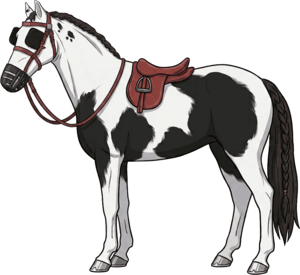 During a short consultation with Freud on 30 March 1908, Hans described being particularly bothered by the horses’ blinkers (the coverings over their eyes) and the black around their mouths.
Further questioning by his father revealed that Hans’ fear had become generalised to carts, furniture vans, and buses – particularly because he feared that they might fall over when turning. He also said that he was very afraid of heavily loaded coal carts. When his father asked whether he had thought about his father when he saw the horse fall, Hans replied: “Perhaps. Yes. It’s possible.”
Fantasies
Hans also experienced anxiety about his mother leaving him and had various fantasies and daydreams during the study:
- Giraffe fantasy: On 27th March 1908, Hans described imagining a large giraffe and a crumpled giraffe. The large giraffe was calling out until Hans took the crumpled giraffe away from it. Hans then sat on top of the crumpled giraffe. He was not frightened and insisted that this was something he had imagined rather than a dream. The fantasy occurred shortly after Hans had visited the zoo, where he had seen giraffes.
- First plumber fantasy: On 11th April 1908, Hans described a plumber who came while he was in the bath. The plumber unscrewed the bath and drilled a large hole in Hans’ stomach. Later that day, Hans also talked about being afraid that his mother would let him fall under the water while he was in the bath.
- Parenting fantasy: On 30th April 1908, Hans described himself as the father of imaginary children. His mother was the children’s mother, while his own father was their grandfather. Hans therefore imagined himself taking on the role of a father within his own family.
- Second plumber fantasy: On 2nd May 1908, Hans later described another plumber who removed his “behind” and “widdler” with a pair of pincers and then replaced them with bigger ones. When his father asked whether the new “widdler” and “behind” were like his father’s, Hans agreed. He also said that he wanted a moustache like his father’s and hair like his father’s chest hair.
Resolution of the phobia
By 26 April 1908, Hans’ anxiety had almost completely disappeared, although he still preferred to remain near his home.
The analysis ended in May 1908.
Conclusions
As this was a case study, Freud’s conclusions were mainly based on his interpretations of Hans’ behaviour, conversations, fantasies, and fears. He interpreted these events as symbolic expressions of Hans’ unconscious thoughts and wishes.
Interpretation of the horse phobia
Freud interpreted Hans’ horse phobia as being connected to his relationship with his father and his unconscious fears and wishes. Several features of the phobia were interpreted symbolically:
| Observation | Freud/Hans’ father’s interpretation |
|---|---|
| Fear of white horses | Linked to Hans’ unconscious fears and his relationship with his father |
| Horse falling and kicking | May have represented a wish for his father to fall |
| Fear of horse biting him | Fear of punishment from his father for wishing he would fall |
| Fear of horses’ blinkers | Freud interpreted the blinkers as representing his father’s glasses |
| Black around horses’ mouths | Freud interpreted this as representing his father’s moustache |
| Fear of heavily loaded carts | Linked to Hans’ preoccupation with “lumf” and the idea of a heavily loaded stomach |
Freud linked these interpretations to the Oedipus complex, an important part of his theory of psychosexual development (see above), which says:
- During the phallic stage (around 3-5 years of age), boys develop an unconscious sexual attraction towards their mother
- They view their father as a rival for the mother’s attention, which leads to feelings of jealousy and hostility.
- However, they also fear punishment from his father, particularly castration (the loss of his penis).
- This Oedipus complex is resolved when the boy identifies with his father (i.e. begins to see himself as similar to his father and adopts some of his characteristics and behaviours) and adopts his characteristics. By identifying with his father, the boy can give up his desire for his mother and displace his sexual feelings onto other people, eventually forming appropriate relationships outside the family.
Freud argued that Hans’ behaviour showed evidence of this conflict. The horse was a symbolic substitute for Hans’ father, allowing his unconscious conflict to be expressed as a phobia. Freud thus saw the case study as evidence supporting his theories and the view that childhood fears and behaviour can be influenced by unconscious psychosexual conflicts.
Interpretation of the fantasies
Like Hans’ horse phobia, Freud saw Hans’ various fantasies as evidence supporting the Oedipus complex – that Hans had an unconscious fear of his father and desire for his mother:
| Fantasy | Freud’s interpretation |
|---|---|
| Giraffe fantasy | Hans’s father interpreted the large giraffe as himself, particularly his penis because of its long neck, and the crumpled giraffe as his wife. Hans took the crumpled giraffe away from the large giraffe and then sat on it. The fantasy was interpreted as expressing Hans’ longing for his mother – he took the crumpled giraffe away from the big giraffe. |
| First plumber fantasy | A plumber came while Hans was in the bath, unscrewed it, and drilled a hole in his stomach. Later that day, Hans said he feared his mother would let him fall under the bath water and agreed that he had previously wished she would let Hanna fall into the bath and drown. Freud interpreted the plumber as a symbol of punishment: the plumber’s drilling into Hans’ body represented castration anxiety (fear of losing his penis) and the fear of falling under the bath water represented punishment for his hostile wishes towards his sister. |
| Second plumber fantasy | A plumber removed Hans’ “behind” and “widdler” and replaced them with bigger ones. When questioned by his father, Hans said that he wanted them to be like his father’s and also said that he wanted his father’s moustache and chest hair. Freud interpreted this as overcoming his castration anxiety, because the penis was not simply taken away but replaced with a larger one. Hans’ wish to have features like his father’s was also interpreted as identification with his father, supporting Freud’s view that identification helps resolve the Oedipus complex. |
| Parenting fantasy | Hans imagined himself as the father of imaginary children, with his mother as their mother and his father as their grandfather. Freud interpreted this as a resolution of the Oedipus complex because Hans had found a way to include his father in the family rather than seeing him as a rival for his mother’s attention. By taking on the role of father himself, Hans was identifying with his father and redirecting his desire for a relationship with his mother into an acceptable family role. |
Further, Freud interpreted other aspects of Little Hans’ behaviour as expressions of the Oedipus complex – specifically his desire for exclusive access to his mother. For example, Hans’ jealousy towards his baby sister suggested a desire to have his mother to himself. Freud also linked Hans’ preoccupation with “lumf” and heavily loaded carts to his attempts to understand where babies came from. Curious about this, Hans imagined birth as a process similar to passing faeces. Freud viewed this focus on “lumf” and heavy loads as an unconscious interest in his mother’s body and a reaction to his sister’s birth.
Overall, Freud argued that the Little Hans case study provided evidence for his broader theory that children’s behaviour and thoughts can be influenced by unconscious psychosexual conflicts. In particular, Hans’ fantasies were interpreted as showing the development and eventual resolution of the Oedipus complex and castration anxiety. The subsequent disappearance of Hans’ anxiety and phobia was interpreted as further evidence that psychoanalysis had helped resolve these underlying unconscious conflicts.
Evaluation
Research methods and techniques
Freud used an in-depth case study of Little Hans. The study can also be considered longitudinal because Hans was studied repeatedly over approximately two years.
- In-depth investigation: The case study produced detailed information about Hans’s behaviour, fears, dreams, fantasies, relationships, and conversations. This allowed Freud to investigate the development of his horse phobia and explore possible psychological explanations in considerable depth.
- Longitudinal: Hans was studied repeatedly over an extended period rather than at a single point in time. This allowed Freud to examine how his fears and fantasies developed and how his symptoms changed over time.
- Lack of control: As a case study, there was no experimental manipulation or control condition. This means that it is difficult to establish whether the factors identified by Freud actually caused Hans’s behaviour.
- Researcher bias: Freud was investigating Hans in order to examine his own psychoanalytic theories. This creates a risk that observations and interpretations were influenced by Freud’s expectations.
- Father as investigator: Most of the information was collected by Hans’s father, who observed and questioned his own son. The close relationship between them could have affected both the questions asked and the answers Hans gave.
- Leading questions: Hans’s father sometimes asked questions that suggested a particular interpretation. For example, after Hans had seen a horse fall, his father asked whether he had thought about his father. This could have influenced Hans’s responses and reduced the objectivity of the data.
Population and sampling
The study involved a single young boy – Little Hans – who was approximately five years old when the main period of investigation took place.
- Detailed individual case: Studying one child in depth allowed Freud to explore psychological development in much greater detail than would have been possible using a large-scale study.
- Sample of one: Only Hans was studied. This makes it difficult to know whether his experiences were typical of other children or whether they were unusual to him.
- Limited evidence for Freud’s theories: Freud used Hans’s experiences to support theories about childhood psychosexual development, but evidence from one child cannot establish that all children pass through the same psychological processes.
- Male participant: Hans was a boy, so the study provides limited evidence about female psychosexual development. Freud’s conclusions about childhood sexuality cannot automatically be generalised to girls.
Types of data
Freud mainly collected qualitative data – detailed reports of Hans’s conversations, behaviour, dreams, fantasies, and fears. This qualitative data also included interpretations made by Hans’ father and Freud himself.
- Rich and detailed: The qualitative data provided detailed information about Hans’s thoughts, feelings and experiences. This allowed Freud to explore the possible meanings behind apparently irrational fears and fantasies.
- Useful for understanding individual experience: The detailed accounts allowed Freud to examine changes in Hans’s behaviour over time rather than reducing his experiences to numerical scores.
- Subjective interpretation: Much of the data required interpretation. Freud and Hans’s father assigned meanings to Hans’s dreams, fantasies and fears, such as interpreting horses as symbolic representations of his father. It is difficult to establish objectively whether these interpretations were correct.
- Difficult to compare: Because the data were largely descriptive and concerned one individual, they cannot easily be compared statistically with data from other children.
Representativeness and generalisability
The study provides a highly detailed account of one middle-class child living in Vienna in the early twentieth century.
- Small sample: The study involved only one child, so it cannot provide strong evidence that the psychological processes observed in Hans occur in other children.
- Individual differences: Hans may have had experiences, personality characteristics or family circumstances that were different from those of other children. This limits the extent to which his behaviour can be generalised.
- Middle-class family: Hans came from a relatively privileged middle-class family in Vienna. Children from different social and economic backgrounds may have different experiences of childhood, family relationships and sexuality.
- Limited evidence about girls: Because Hans was male, the findings provide little direct evidence about female psychosexual development.
- Freud’s defence: Freud argued that Hans was not unusually abnormal and that his difficulties were no more serious than those experienced by many other children. Freud therefore believed that the psychological processes he identified could be relevant to normal childhood development.
- Common childhood phobia: Although Hans himself was a unique individual, fears and phobias are relatively common in childhood. This means that some aspects of the case may be relevant beyond Hans, even if Freud’s specific psychoanalytic interpretation cannot be generalised.
Ethical issues
- Protection from harm: Freud was aware of the possibility that psychoanalysis could cause harm and argued that Hans’s condition improved rather than deteriorated. He reported that Hans recovered from his phobia and later appeared to be psychologically well.
- Informed consent: As Hans was a young child, his parents were responsible for consenting to his involvement and to the publication of the case. Hans’s father also appears to have been open with him about the purpose of recording his conversations.
- Privacy: Freud used the pseudonym ‘Little Hans’ rather than publishing the child’s real name. This helped protect Hans’s identity.
- Children as participants: Hans was a young child and therefore had less ability than an adult to understand or challenge the psychological investigation being conducted. This placed an increased responsibility on his parents and Freud to protect his welfare.
- Potential psychological harm: The study involved extensive questioning about Hans’s fears, sexuality and fantasies. There is a potential ethical concern that repeatedly focusing on these issues could have increased his anxiety or influenced his behaviour.
- Relationship between researcher and participant: Hans’s father was responsible for collecting much of the data while also being his parent. This creates a potential conflict between the father’s role as caregiver and his role as investigator.
Overall, Freud took some steps to address the ethical issues involved in studying a young child such as obtaining parental consent, protecting Hans’s identity through the use of a pseudonym, and monitoring whether the analysis appeared to cause harm. However, Hans’s young age, the sensitive nature of the questions about his sexuality and fantasies, and the fact that his father acted as both his parent and investigator raise concerns about potential psychological harm. As such, Freud (1909) could raise ethical concerns by modern standards.
Validity
- Internal Validity: Do Freud’s interpretations accurately explain Hans’s behaviour, or could other explanations account for the findings?
- Detailed data: The repeated observations and detailed accounts of Hans’s conversations, fears and fantasies provided Freud with substantial information from which to develop his explanations.
- Alternative explanations: Hans’s behaviour may have had simpler explanations than Freud’s psychodynamic interpretation. For example, his fear of horses could have developed through classical conditioning after hearing that horses could bite and seeing a horse fall. His desire to stay close to his mother could also be explained in terms of attachment rather than unconscious sexual desire.
- Leading questions: Hans’s father sometimes asked questions that suggested particular answers. This could have encouraged Hans to produce material that fitted his father’s expectations rather than revealing completely independent thoughts.
- Subjective interpretation: Freud interpreted symbols such as horses, giraffes and plumbers as expressions of unconscious conflicts. There is no objective way to establish that these symbols had the meanings Freud assigned to them.
- Demand characteristics and suggestion: Hans knew that his father was reporting his “nonsense” to a professor. He may therefore have been influenced by his father’s expectations or by his desire to please him. This could reduce the validity of the conclusions.
- Recovery cannot be attributed confidently to psychoanalysis: Hans’s phobia eventually disappeared, but this does not prove that psychoanalysis caused the improvement. He may have naturally grown out of the phobia, or the attention and reassurance he received from his father may have contributed to his recovery.
- Ecological Validity: Do the findings reflect childhood behaviour in the real world?
- Natural environment: Much of the data came from Hans’s everyday life with his family rather than from an artificial laboratory setting. His fears, conversations and fantasies therefore occurred in situations that were meaningful to him.
- Real behaviour: Freud studied Hans’s actual phobia and everyday behaviour rather than creating an artificial fear for the purposes of the study.
- Influence of the investigation: Although the behaviour occurred in natural settings, Hans knew that his father was observing and reporting him. This means that the research process itself may have influenced his behaviour.
Reliability
- Internal Reliability: Was the data collection and interpretation consistent within the study?
- Repeated observations: Hans was observed and questioned repeatedly over an extended period. This provided multiple opportunities to examine whether patterns in his behaviour and fears remained consistent.
- Unstructured interviews: Hans’s father generally asked questions in response to Hans’s comments rather than following a standardised interview schedule. This means that the questions could vary depending on the conversation and the father’s interpretation of what Hans said.
- Subjective interpretation: Freud and Hans’s father interpreted Hans’s behaviour and fantasies rather than simply recording objective measurements. Different psychologists could therefore interpret the same material differently.
- External Reliability: Could the study be repeated with the same or different participants and produce similar findings?
- Difficult to replicate: The case study depended heavily on Hans’s individual experiences, his relationship with his father and the particular conversations that took place. A different child or researcher might produce very different material.
- Small sample: A sample of one cannot establish that Freud’s proposed psychological processes occur consistently across children.
- Interpretive nature: Even if another researcher collected similar qualitative data, they might interpret the dreams and fantasies differently. This makes it difficult to establish consistent findings.
- Longitudinal evidence: The repeated observations over approximately two years allowed Freud to identify patterns rather than relying on a single observation. This provides some evidence of consistency within Hans’s individual case.
Ethnocentrism
The study was conducted with a middle-class child living in Vienna in the early twentieth century.
- Weaknesses:
- Limited cultural representation: The study involved one child from one cultural setting. It therefore provides very limited evidence about whether Freud’s conclusions apply to children from other cultures.
- Middle-class Vienna: Hans’s family circumstances, parenting practices and experiences may have been different from those of children from other social and cultural backgrounds.
- Cultural differences in childhood: Attitudes towards parents, sexuality, family relationships and children’s independence vary between cultures. These differences could affect children’s behaviour and the way it is interpreted.
- Generalising from one culture: Freud used Hans’s experiences to support theories of psychosexual development that were intended to describe children more generally. Evidence from one child in one cultural setting is insufficient to establish that these processes are universal.
However, some aspects of Hans’s behaviour, such as childhood fears and phobias, are found across many cultures. This means that the case may still provide useful insights into childhood behaviour, even if Freud’s specific psychodynamic explanations cannot automatically be assumed to apply universally.
Evaluation summary table
| Freud (1909) | |
|---|---|
| Research methods and techniques | Freud’s in-depth case study and longitudinal approach produced detailed information about Hans’s behaviour, fears, fantasies, and development over time. However, the single subject, lack of experimental control, use of leading questions, and involvement of Hans’s father as investigator reduce objectivity and make it difficult to establish cause and effect. |
| Data types | The study produced rich qualitative data about Hans’s thoughts, feelings, conversations, dreams, and fantasies, allowing Freud to explore his individual experience in considerable depth. However, much of the data required subjective interpretation, so Freud’s explanations may not accurately represented Hans’s psychological processes. |
| Representativeness and generalisability | The study involved only one young middle-class boy from Vienna, meaning that the findings cannot confidently be generalised to other children, girls, or people from different social and cultural backgrounds. Freud argued that Hans’s difficulties were not unusually severe and that the psychological processes he experienced were part of normal childhood development. |
| Ethical issues | Freud used a pseudonym to protect Hans’s identity and his parents provided consent for the case to be published. Freud also argued that the analysis did not harm Hans and that his symptoms disappeared. However, Hans was a young child and was repeatedly questioned about sensitive topics such as sexuality, fears, and fantasies, creating potential concerns about psychological harm and his ability to give informed consent. |
| Validity | The detailed longitudinal data and natural setting allowed Freud to examine Hans’s behaviour in depth and follow changes in his phobia over time. However, leading questions, the father-son relationship, and Freud’s subjective interpretations leave room for many alternative explanations of the findings. Hans’s recovery also can’t confidently be attributed to psychoanalysis because he may have naturally grown out of the phobia. |
| Reliability | Repeated observations over approximately two years allowed Freud to identify patterns in Hans’s behaviour rather than relying on a single observation. However, the unstructured interviews, subjective interpretations, and sample of one make the study difficult to replicate and provide little evidence that the same findings would occur in other children. |
| Ethnocentrism | The study focused on one middle-class child from Vienna so Freud’s conclusions about psychosexual development may reflect the particular cultural and social context in which Hans was raised. However, childhood fears and phobias occur across cultures, so some aspects of the case may have wider relevance even if Freud’s specific psychodynamic interpretation is not universal. |
Relation to the psychology of individual differences more broadly
Freud (1909) contributes to the psychology of individual differences by demonstrating how individual behaviour can be understood in terms of unconscious psychological processes and early childhood experiences. The study suggests that children’s fears, fantasies, and relationships may be influenced by underlying psychosexual conflicts. Although Freud’s interpretations have been criticised for being subjective and difficult to generalise, the study remains influential because it contributed to the development of psychodynamic psychology and helped establish the importance of unconscious processes in explaining behaviour. The case also illustrates how individual psychological experiences can be explored in depth through a case study and Freud’s ideas about unconscious conflict, childhood experiences, and psychosexual development continue to influence psychological theory and discussion.
The table below summarises how this study compares with other core studies in this area and evaluates its contribution and current relevance:
| Freud (1909) | |
|---|---|
| How the study relates to the psychology of individual differences | Freud contributes to the psychology of individual differences by demonstrating how an individual’s behaviour can be understood in terms of their unique experiences, relationships, and unconscious psychological processes. The detailed case study of Little Hans illustrates how apparently irrational behaviour, such as a phobia, may be linked to underlying psychological conflicts. |
| Comparison with Baron-Cohen et al (1997) |
Similarities:
Both studies investigate individual differences in psychological functioning and attempt to explain differences in behaviour or mental processes. Differences:
Freud focused on unconscious psychodynamic processes, particularly psychosexual development and the Oedipus complex. Baron-Cohen et al focused on cognitive differences in autism – particularly differences in theory of mind and the ability to understand other people’s mental states. |
| Comparison with Van Leeuwen et al (2008) |
Similarities:
Both studies investigate why individuals differ psychologically and attempt to identify factors that may contribute to these differences. Both recognise that individual behaviour cannot necessarily be explained by a single universal account of human behaviour. Differences:
Freud explained individual differences primarily through unconscious psychological processes and early experiences. Van Leeuwen et al investigated the contribution of genetic and environmental factors to individual differences in intelligence, providing a more biologically based explanation. |
| Contribution to understanding diversity |
Individual differences:
The study demonstrates how an individual’s behaviour may be shaped by their particular experiences, relationships and psychological development. However, because only Hans was studied, it provides limited evidence about why different individuals may respond differently to similar experiences. Social and group differences:
The study provides little evidence about differences between social or demographic groups. Freud focused on the psychological experiences of one individual rather than comparing people from different groups. Cross-cultural differences:
The study provides limited evidence about cultural differences because it focused on one middle-class child from Vienna. Freud’s conclusions about psychosexual development therefore cannot automatically be assumed to apply across different cultures. |
| Usefulness | Freud’s study is useful because it demonstrates how detailed investigation of an individual can provide insights into psychological development and behaviour. Practical applications include:
|
| Current relevance | Freud’s specific explanations of Hans’s behaviour, such as the interpretation of his horse phobia in terms of the Oedipus complex, remain controversial and are not widely accepted as objective explanations. However, the broader idea that childhood experiences and individual psychological factors can contribute to later behaviour remains relevant to modern psychology. The case also remains useful as an example of how individual differences can be investigated through detailed case studies. |