
Overview – Casey et al (2011)
Casey et al (2011) is a key study in developmental and biological psychology. It investigated whether differences in children’s ability to delay gratification could still be seen when those children became adults. The study followed some of the children who had taken part in Walter Mischel’s delay of gratification research in the late 1960s and early 1970s. In the original research, children were given a choice between receiving a smaller reward immediately or waiting for a larger reward. Casey et al examined some of these participants approximately 40 years later. The researchers investigated whether people who had been better or worse at delaying gratification as children differed in their ability to control their behaviour as adults. The researchers also used functional magnetic resonance imaging (fMRI) to investigate whether differences in self-control were associated with differences in activity in particular brain regions. The findings suggested that the ability to delay gratification is a relatively stable individual difference. People who had scored low for their ability to delay gratification as children had greater difficulty as adults in controlling their responses when exposed to emotionally tempting social cues, such as happy faces.
You can jump to different sections of this article via the links below:
- Aim
- Method (sampling and procedure)
- Results
- Conclusions
- Evaluation and methodological issues
- Relation to biological psychology more broadly
Casey et al (2011)
Aim
The aim of Casey et al (2011) was to investigate whether delay of gratification in childhood predicted impulse control and sensitivity to tempting or socially rewarding cues 40 years later.
Delay of gratification refers to the ability to resist a smaller immediate reward in order to obtain a larger reward later. The researchers were interested in whether this ability was stable across a person’s life. They also wanted to investigate whether childhood delay of gratification was related to differences in the brain systems involved in controlling behaviour and responding to rewards.
Previous research by Eigsti et al (2006) had found that performance on a delay of gratification task in childhood predicted performance on a cognitive-control task during adolescence and young adulthood. Children who focused strongly on the tempting aspects of the reward had more difficulty controlling inappropriate responses later. This suggested that early differences in self-control might continue into later life.
However, self-control does not operate in exactly the same way in every situation. Previous research suggested that tempting or emotional information can make self-control more difficult. Casey et al wanted to investigate whether the relationship between early delay of gratification and later self-control became particularly clear when people were exposed to emotionally meaningful – ‘hot’ – stimuli.
The researchers also wanted to investigate the brain mechanisms involved in all this. Previous brain-imaging research had suggested that the prefrontal cortex is important for cognitive control and areas including the ventral striatum are involved in reward and motivation.
The study therefore had both a behavioural and a neural aim:
- Behavioural aim: The researchers wanted to know whether people who had been better or worse at delaying gratification as children would show different levels of impulse control as adults and whether this difference would be greater when they were exposed to emotionally meaningful ‘hot’ stimuli than more neutral ‘cool’ stimuli.
- Neural/biological aim: The researchers wanted to know whether these differences would be associated with activity in brain regions involved in control and reward.
Method
Casey et al used a quasi-experiment – the researchers studied naturally occurring differences between participants rather than randomly assigning participants to conditions.
- The key independent variable (IV) was whether participants were classified as high delayers or low delayers (as determined by an earlier study). This was a naturally occurring variable because the researchers could not decide whether a participant would have been a high or low delayer as a child.
- The dependent variable (DV) was the participants’ performance on the impulse-control task (Experiment 1). This was measured using accuracy and reaction time. Experiment 2 had the extra dependent variable of brain activity measured using fMRI.
The study also had features of a repeated measures design. For example, participants completed both the ‘hot’ and ‘cool’ versions of the go/no-go task (in Experiment 1).
The study was also longitudinal as the study followed the same people over an extended period of time. Casey et al examined relationships between participants’ behaviour at approximately 4 years of age and their behaviour (and brain activity) later when they were in their 40s.
Participants and sampling
Casey et al used participants from Mischel’s (a co-author) earlier research into delay of gratification.
 Mischel’s original sample consisted of 562 4 year old children from Stanford’s Bing Nursery School. In the late 1960s and early 1970s, these children completed a delay of gratification task. Researchers gave them a choice between a smaller reward immediately or a larger reward if they waited. For example, in the marshmallow test, children could eat one marshmallow immediately or wait and receive a second marshmallow later. This provided a measure of their ability to delay gratification.
The researchers followed up with the participants over several decades. In 1993, 155 of the original participants completed self-control measures (when they were in their 20s). Then, in 2003, 135 participants completed these same self-control measures (when they were in their 30s).
Researchers then identified 117 participants who had shown consistently high or low levels of delay of gratification and self-control. These people were contacted about taking part in this Casey et al (2011) study. Of these, 59 agreed to take part:
- 59 participants took part in Experiment 1:
- 32 high delayers
- 27 low delayers.
- 27 participants from Experiment 1 agreed to take part in Experiment 2, the fMRI study:
- 15 high delayers
- 11 low delayers
- One 41-year-old male participant was excluded because of very poor performance, leaving 26 participants for the final fMRI analysis.
The researchers used a selective sampling method – choosing participants from Mischel’s original study who had long-term data and who had particular patterns of delay of gratification and self-control. Only some of these participants agreed to take part in Casey et al’s study, which made the final sample highly selective.
Procedure
Casey et al used two experiments to investigate whether differences in delay of gratification were related to impulse control and brain activity in adulthood:
- Experiment 1 – behavioural test: Participants completed ‘hot’ and ‘cool’ go/no-go tasks. These tested their ability to control their responses when faced with different types of stimuli.
- Experiment 2 – fMRI test: A smaller group of participants completed a ‘hot’ go/no-go task while undergoing fMRI. This enabled the researchers to investigate which brain areas were active during impulse control.
Experiment 1: Behavioural test
Experiment 1 investigated whether people who had been low or high delayers as children differed in their ability to control their behaviour as adults.
Participants completed a go/no-go task, which tests response inhibition (the ability to stop or withhold a response). In each version of the task, one type of stimulus required a response and another required participants to withhold their response:
- Go: One stimulus is the ‘go’ stimulus, where participants have to press a button.
- No-go: The other stimulus is the ‘no-go’ stimulus, where participants have to withhold their response and not press the button.
Participants were told which stimulus was the go target before each run. They were instructed to respond as quickly and accurately as possible.
The researchers used two versions of the task:
- Cool task: Participants saw male and female faces. One sex was the go stimulus and the other was the no-go stimulus.
- Hot task: Participants saw happy and fearful facial expressions. One expression was the go stimulus and the other was the no-go stimulus.
The cool task used relatively neutral social stimuli. The hot task used emotionally meaningful stimuli. This enabled the researchers to investigate whether emotional cues made impulse control more difficult.
There were 160 trials in each run:
- 120 go trials
- 40 no-go trials.
The trials were presented in a pseudorandomised order. This means that the order was arranged to appear random while still following rules set by the researchers.
Participants completed 4 runs of the cool task and 4 runs of the hot task. Within each version, the researchers varied the stimulus and whether participants had to respond or withhold their response.
The tasks were presented using programmed laptop computers that were sent to participants’ homes.
The researchers recorded two measures:
- Accuracy – whether participants responded correctly.
- Reaction time – how quickly participants responded.
I know this is a confusing setup but, in short, the researchers compared high and low delayers to see whether their ability to control their behaviour differed in adulthood – particularly when responding to emotionally meaningful stimuli (i.e. the hot task).
Experiment 2: fMRI investigation
Experiment 2 investigated whether high and low delayers showed differences in brain activity when controlling their behaviour (it’s basically just a repeat of Experiment 1 but done in an fMRI scanner).
27 participants from Experiment 1 (see above) took part in the fMRI study. But one participant was excluded from the result because of very poor performance that would skew the results, leaving 26 participants for the final analysis.
The participants completed the hot go/no-go task while inside an fMRI scanner. The task used happy and fearful facial expressions, as in the hot task from Experiment 1.
There were 48 trials per run:
- 35 go trials
- 13 no-go trials
The trials were again presented in pseudorandomised order.
The researchers recorded:
- Accuracy – whether participants responded correctly.
- Reaction time – how quickly they responded.
- Brain activity – measured using fMRI.
The researchers compared brain activity between high and low delayers during the go and no-go trials. They focused particularly on brain areas involved in cognitive control and reward.
In short, a subset of participants from Experiment 1 completed a similar version of the ‘hot’ task from that experiment but in an fMRI scanner. This enabled the researchers to measure and compare the brain activity of high and low delayers.
Results
Overall, the results showed that the differences between high and low delayers were most noticeable when participants were exposed to emotionally meaningful ‘hot’ cues.
Experiment 1: Behavioural results
Both sets of participants were highly accurate on the go trials – 99.8% in the cool condition and 99.5% in the hot condition. There was no significant difference between high delayers and low delayers in reaction times for the go trials.
However, the important difference appeared on the no-go trials. The two groups performed similarly on the cool task, but low delayers made more false alarms on the hot task:
| Type of no-go trial | Low delayer errors | High delayer errors |
|---|---|---|
| Happy | 15.7% | 11.2% |
| Fearful | 12% | 10.4% |
In other words, when shown emotionally meaningful stimuli, low delayers were more likely than high delayers to press the button when they weren’t supposed to.
Experiment 2: Behavioural results during fMRI
The same general pattern seen in Experiment 1 was also found when participants completed the tasks inside the fMRI scanner:
- There was no significant difference between high and low delayers on go trials – either in terms of reaction time or accuracy.
- Performance on no-go trials was where there was variation: Low delayers again made more false alarms than high delayers. This supported the findings from Experiment 1.
The fMRI results provided evidence for differences in the brain systems involved in cognitive control and reward.
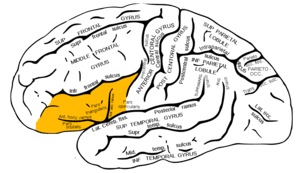 Greater activity in the right inferior frontal gyrus was associated with successfully withholding a response. Compared with high delayers, low delayers showed reduced recruitment of the inferior frontal gyrus when successfully withholding a response.
The ventral striatum (which is strongly associated with reward and motivation) also showed differences between the groups. Low delayers showed greater activation of the ventral striatum during happy no-go trials compared with high delayers.
So, in short, the findings linked differences in impulse control between high and low delayers to two brain systems:
- The inferior frontal gyrus showed greater recruitment in high delayers during successful response inhibition.
- The ventral striatum showed greater activation in low delayers when they were exposed to happy emotional cues.
Summary of results
| What happened | What this suggested | |
|---|---|---|
| Cool go trials, Cool no-go trials, Hot go trials |
No significant difference. High and low delayers performed similarly and showed very high accuracy. | The groups did not simply differ in their general ability to complete the task. |
| Hot no-go trials | Low delayers made more false alarms when responding to emotional faces had to be inhibited. | Low delayers had more difficulty controlling their behaviour in the presence of emotionally tempting cues. |
| Inferior frontal gyrus | High delayers showed greater recruitment of the right inferior frontal gyrus during successful response inhibition. | The prefrontal control system was more strongly engaged by high delayers when they needed to suppress a response. |
| Ventral striatum | Low delayers showed greater activation of the ventral striatum during happy no-go trials. | Reward-related emotional cues appeared to have a stronger effect on the low-delay group. |
Conclusions
Casey et al concluded that individual differences in self-control can remain relatively stable across development but that self-control also depends on the situation. Low delayers were particularly vulnerable to emotionally rewarding cues, which was reflected in both their behaviour and differences in brain activity in systems involved in cognitive control and reward.
Behavioural conclusions
The behavioural results suggested that low delayers had greater difficulty inhibiting responses when exposed to emotionally meaningful ‘hot’ cues.
People who had greater difficulty delaying gratification as young children were more likely to show reduced self-control later in life. In the study, this was demonstrated by low delayers being more likely to press the button in the ‘hot’ condition when they should have withheld their response.
This difference was not seen to the same extent in the neutral ‘cool’ condition, which suggested that the two groups did not simply differ in their general ability to perform the task. Instead, self-control appeared to depend partly on the context, with low delayers being more vulnerable to emotionally meaningful cues.
Casey et al thus concluded that delay of gratification is a relatively stable trait across a person’s life.
Biological conclusions
The fMRI results suggested that differences in self-control were related to differences in the brain systems involved in cognitive control and reward processing.
High delayers showed greater recruitment of the right inferior frontal gyrus when they successfully withheld a response. This suggests that high delayers were more strongly engaging this region when they needed to control their behaviour.
Low delayers showed greater activation of the ventral striatum during happy no-go trials. This suggests that happy faces acted as particularly powerful reward-related or motivational cues for the low-delay group.
The findings therefore suggested that resistance to temptation may depend on the balance between brain systems involved in cognitive control and systems involved in reward and motivation.
The study also provided evidence that early behaviour can have predictive value over a very long period of development. Differences in delay of gratification at approximately four years of age were related to differences in impulse control and brain activity when participants were in their 40s.
Overall, Casey et al concluded that individual differences in delay of gratification are related to differences in brain activity, and that these differences can remain relatively stable across development. However, sensitivity to emotionally meaningful cues also plays an important role in the ability to control behaviour.
Evaluation
Research methods and techniques
Casey et al used a quasi-experiment with highly controlled behavioural tasks and fMRI scanning. The study also had a longitudinal element because the same individuals were followed from childhood into adulthood.
- Highly controlled procedure: The go/no-go task was standardised. The researchers controlled the type of stimulus, how long each face was shown, the number of go and no-go trials and the order in which stimuli were presented. This increases internal validity because it reduces the influence of unwanted variables.
- Behavioural and biological measures: The researchers measured both behaviour and brain activity. Accuracy and reaction times provided behavioural data, while fMRI provided information about neural activity. Using more than one type of measure gives a broader picture of self-control.
- Hot and cool conditions: The researchers compared emotionally meaningful stimuli with more neutral stimuli. This allowed them to investigate whether self-control depended on the situation rather than simply measuring general ability.
- Longitudinal design: Following participants across several decades allowed the researchers to investigate whether early individual differences were related to later behaviour. This would not have been possible in a simple cross-sectional study, which compares different age groups at one point in time.
- No random allocation: The high- and low-delayer groups were naturally occurring. Participants were not randomly assigned to these groups. This means that other differences between the groups may have contributed to the results.
- Correlation does not prove causation: The study found relationships between childhood delay of gratification, adult self-control, and brain activity. However, it cannot prove that early delay of gratification directly caused the later differences. Other variables may have influenced development.
Population and sampling
The original sample consisted of 562 children. However, only 59 participants took part in Experiment 1 approximately 40 years later, and only 26 were included in the final fMRI analysis.
- Long-term sample: The researchers were able to follow participants for approximately four decades. This provided a rare opportunity to examine development across a very long period.
- Relevant sample: The participants had already completed the original delay-of-gratification task. This meant the researchers had information about their behaviour during early childhood and could compare this with their behaviour as adults.
- Small final sample: Only 59 participants completed Experiment 1 and just 26 were included in the final fMRI analysis. This limits how confidently the findings can be generalised.
- Attrition: Attrition means participants dropping out of a longitudinal study over time. The sample became much smaller as the researchers followed people from childhood into adulthood. This may have introduced bias if the people who remained differed from those who dropped out. For example, if people with lower self-control were more likely to drop out, the final sample might have included more high-self-control participants and therefore not be representative of the original group.
- Selective sample: The participants were selected partly because they had unusually high or low scores on the original measures and later self-control measures. This means the final sample was not representative of the whole population.
Types of data
Casey et al collected mainly quantitative data. The study included accuracy scores, reaction times, and measurements of brain activity from fMRI.
- Precise: Accuracy and reaction-time scores provide numerical measures of performance. This makes it possible to compare high and low delayers objectively.
- Statistical analysis: The researchers used statistical tests to determine whether differences between the groups were likely to be meaningful rather than due to chance.
- Objective biological data: fMRI provided numerical information about changes in brain activity. This allowed the researchers to investigate biological mechanisms associated with self-control.
- Reduced detail about individual experiences: Numerical measures cannot fully explain why a participant found a particular emotional stimulus tempting or how they experienced the task.
- fMRI is an indirect measure: fMRI does not directly record individual neurons firing. It measures changes in blood oxygenation associated with neural activity. As such, the imaging results must still be interpreted carefully.
Representativeness and generalisability
The study has several limitations when applying its findings to the wider population.
- Longitudinal evidence: The study followed the same individuals over a very long period. This gives useful evidence about how individual differences can persist across development.
- Both sexes included: The sample included male and female participants, allowing the researchers to investigate the findings across both sexes.
- Small sample: The final samples were much smaller than the original group of 562 children. A small sample may not represent the wider population.
- Selective sample: Participants were chosen because they had above- or below-average scores on earlier measures. This makes the sample unusual and reduces population validity.
- Historical and cultural limitations: The original participants came from one nursery school and were studied in the United States during the late 1960s and early 1970s. Social and cultural conditions have changed considerably since then.
Ethical issues
- Informed consent: Participants consented to take part in the adult behavioural and fMRI research. Informed consent means that participants agree to take part after being given appropriate information about the research.
- Protection from physical harm: The behavioural tasks involved pressing buttons in response to faces and did not involve significant physical risk. fMRI is a non-invasive brain-imaging technique, although participants still need to be screened for safety before entering the scanner.
- Right to withdraw: Participants could choose whether to take part in the follow-up research. They were not required to participate simply because they had taken part in the original childhood study.
- Deception: There was no obvious requirement for extensive deception. Participants were completing straightforward behavioural and imaging tasks.
- Privacy: Long-term data: The researchers had access to information about participants collected across several decades. Longitudinal research therefore requires careful protection of participants’ personal information.
Overall, the adult research appears to have involved relatively low physical risk and participants consented to the follow-up procedures.
Validity
- Internal Validity: Do the findings accurately show differences in impulse control and their relationship with brain activity?
- Standardised task: The go/no-go task was highly controlled. The timing, number of trials, and types of stimuli were carefully specified.
- Hot versus cool comparison: Comparing emotional and neutral conditions helped the researchers identify whether tempting cues specifically affected self-control.
- Multiple measures: Accuracy, reaction time, and fMRI data all provided evidence about performance and brain activity.
- Confounding variables: A confounding variable is an unwanted variable that could affect the results. Because high and low delayers were naturally occurring groups, other differences between them may have influenced the findings. For example, the high and low delayers may have differed in factors such as parenting, socioeconomic background, or education, which could have affected their development of self-control independently of their early delay-of-gratification ability.
- Brain activity cannot establish cause: The fMRI results show associations between brain activity and behaviour. However, they do not prove that activity in a particular brain region caused the differences in self-control.
- Ecological Validity: Do the findings translate to real-life self-control?
- Artificial task: Pressing buttons in response to photographs of faces is not the same as making real-life decisions about food, money or other rewards.
- Limited range of cues: The hot condition used happy and fearful faces. Real-life temptations are much more varied.
- Relevant psychological process: The task measured response inhibition, which is an important component of everyday self-control.
- Hot condition: Including emotionally meaningful faces made the task more realistic than using only completely neutral stimuli. It allowed the researchers to examine how emotional cues can interfere with control.
Reliability
- Internal Reliability: Is the procedure and measurement consistent within the study?
- Standardisation: Participants completed carefully controlled go/no-go tasks with specified timings, numbers of trials, and response instructions.
- Repeated conditions: Participants completed different versions of the task. This allowed the researchers to compare performance within the same individuals.
- Objective measures: Reaction time and accuracy were recorded numerically, reducing the influence of subjective judgement by the researchers.
- Individual differences: Participants differed in their ability to control responses, particularly when exposed to hot cues. This means that performance was not identical across individuals.
- External Reliability: Can the study be repeated at another time and with another sample?
- Highly standardised procedure: The behavioural task was programmed and followed clear rules. This makes the basic experiment reasonably easy to replicate.
- Objective measurements: Accuracy, reaction time, and fMRI measures provide relatively consistent ways of measuring performance.
- Rare longitudinal sample: It would be extremely difficult to reproduce a study in which the same participants had been followed from age four into their 40s.
- Historical differences: A new sample studied today would grow up in different social and cultural conditions from the original participants.
Ethnocentrism
- US Sample: All participants came from the United States, specifically Stanford’s Bing Nursery School. This means the findings may reflect aspects of American culture rather than being universally applicable.
- Specific social background: Many of the original participants were children of Stanford faculty and staff, meaning the sample may have had a relatively advantaged educational and socioeconomic background.
- Cultural differences: Ideas about rewards and self-control can vary between cultures. Therefore, the relationship between delay of gratification and later impulse control may not be the same in other cultures.
Evaluation summary table
| Casey et al (2011) | |
|---|---|
| Research methods and techniques | The quasi-experiment used highly controlled go/no-go tasks and fMRI. The hot and cool conditions allowed the researchers to investigate whether emotional cues affected self-control. However, high and low delayers were naturally occurring groups, so participants could not be randomly assigned. Other differences between the groups may therefore have influenced the results. |
| Data types | The study produced precise quantitative data, including reaction times, accuracy scores and fMRI measurements. This allowed statistical comparisons between high and low delayers. However, numerical data provide limited information about participants’ personal experiences of temptation and self-control, and fMRI provides an indirect measure of neural activity. |
| Representativeness and generalisability | The study provides valuable long-term evidence because the same individuals were followed from childhood into adulthood. However, the final sample was small and selective. Attrition and the unusual selection of high and low delayers make it difficult to generalise the findings to the wider population. |
| Ethical issues | Participants consented to take part in the adult research, and the behavioural and fMRI procedures were relatively low risk. There was no obvious need for extensive deception. |
| Validity | The standardised tasks reduced the effect of extraneous variables. Comparison of hot and cool conditions increased internal validity by showing differences were specifically related to emotionally meaningful stimuli rather than general ability to complete the task. Further, the use of behavioural and fMRI measures provided converging evidence as differences in response inhibition were supported by differences in activity in brain regions involved in cognitive control and reward. However, the naturally occurring groups mean that other variables could explain some differences. The laboratory task also has limited ecological validity. |
| Reliability | The highly standardised go/no-go task and objective measures of accuracy and reaction time make the behavioural procedure reasonably easy to replicate. However, reproducing the exact longitudinal sample would be extremely difficult, and the small final sample limits confidence that every finding would be replicated. |
Relation to biological psychology more broadly
Casey et al (2011) is important to biological psychology because it provided evidence that impulse control is associated with activity in specific brain systems. The inferior frontal gyrus was associated with cognitive control and the ability to inhibit responses, while the ventral striatum was associated with reward and sensitivity to tempting stimuli. The findings thus support the idea that behaviour is influenced by biological processes in the brain, with impulse control involving an interaction between brain systems involved in cognitive control and those involved in motivation and reward.
The table below summarises how Casey et al compares with other core biological psychology studies and evaluates its contribution to this area:
| Casey et al (2011) | |
|---|---|
| How the study relates to biological psychology | Casey et al demonstrated a relationship between behaviour and brain function. The study showed that individual differences in impulse control were associated with activity in brain systems involved in cognitive control and reward. The inferior frontal gyrus was associated with response inhibition, while the ventral striatum was associated with responses to rewarding emotional cues. |
| Comparison with Sperry (1968) |
Similarities:
Both studies investigated the relationship between brain function and behaviour. Both provided evidence that different parts of the brain are associated with different psychological functions. Both also used carefully controlled behavioural tasks to investigate brain-related processes. Differences:
Sperry studied split-brain patients whose corpus callosum had been severed and investigated lateralisation of function between the two hemispheres. Casey et al studied naturally occurring differences in self-control and investigated activity in particular brain regions using fMRI. Sperry mainly inferred brain function from behaviour, whereas Casey et al used brain imaging to provide a more direct measure of changes associated with neural activity. Sperry focused mainly on hemispheric specialisation, particularly the role of the left and right hemispheres. Casey et al focused on the interaction between brain systems involved in cognitive control and reward. |
| Comparison with Maguire et al (2000) |
Similarities:
Both studies investigated relationships between brain structure or activity and behaviour. Both used unusual samples that provided an opportunity to investigate biological processes that would be difficult to study using a typical sample. Both used brain-imaging techniques to investigate the relationship between psychological abilities and the brain. Differences:
Casey et al used fMRI to examine changes in brain activity while participants completed an impulse-control task. The study focused on the inferior frontal gyrus and ventral striatum. Maguire et al used MRI to investigate brain structure in London taxi drivers. The study focused particularly on the hippocampus and its relationship with extensive navigation experience. Casey et al was also longitudinal and examined whether childhood behaviour predicted adult behaviour and brain activity. Maguire et al mainly compared experienced taxi drivers with control participants at one point in time. |
| Contribution to understanding diversity |
Individual differences:
Casey et al directly investigated individual differences in self-control. Participants differed in their ability to delay gratification and later differed in how successfully they controlled responses to emotionally meaningful cues. The study therefore provides evidence that people can differ in the way cognitive-control and reward systems influence behaviour. Social and group differences:
The study did not specifically investigate differences between social or socioeconomic groups. It therefore provides limited evidence about whether social background affects the development of self-control or the neural systems involved. Cross-cultural differences:
The study did not compare participants from different cultures or countries. The original participants came from one nursery school in the United States, so the findings cannot establish whether the same developmental patterns occur across different cultures. |
| Usefulness | Casey et al is useful because it links developmental behaviour with biological processes. It suggests that early differences in delay of gratification can be associated with later differences in impulse control and activity in brain systems involved in control and reward. The findings may also be useful when considering strategies for improving self-control, particularly in situations involving strong emotional or rewarding cues. |
| Current relevance | Casey et al is relevant today because modern psychology continues to investigate the relationship between self-control, development and brain function. Modern neuroimaging techniques can provide increasingly detailed information about brain activity and connectivity. However, the study remains important because it combined longitudinal behavioural evidence with biological measures, linking childhood behaviour to adult neural activity. |